In our last article, we covered what smart pet devices are and why they are a game-changer for modern pet owners. You now know how they can reduce anxiety, automate care, and even monitor your pet’s health.
But now comes the crucial step: choosing the right device for your unique situation. The market is flooded with high-tech feeders, 360° cameras, and GPS trackers, all promising a better life for your pet. It’s easy to get overwhelmed or, worse, buy an expensive gadget that doesn’t actually solve your specific problem.
This guide will cut through the noise. We’ll walk you through a simple, four-step process to find the perfect first smart device for you and your pet.
Step 1: Start with Your Pet’s Needs (Your Biggest Problem)
The most common mistake is buying a device because it looks “cool” or a friend recommended it. The “best” device is the one that directly solves your most significant problem or anxiety as a pet parent.
Use this Problem-First Assessment to identify your primary “why.”
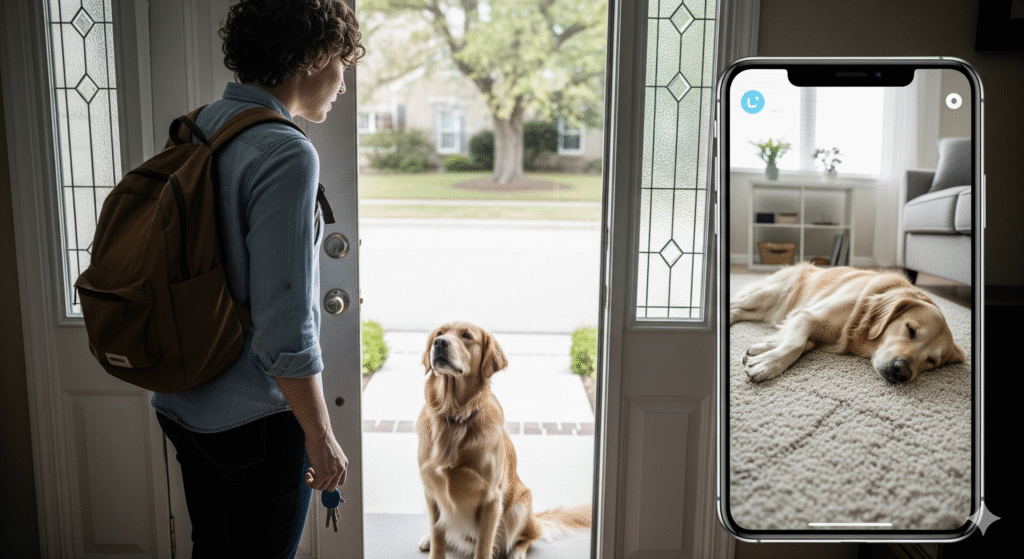
- Your Problem: “I feel anxious and guilty at work. I just want to know if my pet is okay and what they’re doing.”
- Your Primary Solution: A Smart Pet Camera. The ability to open an app and see your pet sleeping peacefully (or playfully interacting) is the perfect starting point for peace of mind.
- Key Features to Prioritize: 1080p HD video, two-way audio (to hear and speak), good night vision.
- Your Problem: “My work schedule is irregular, and I’m always stressed about feeding my pet on time and with the right portion.”
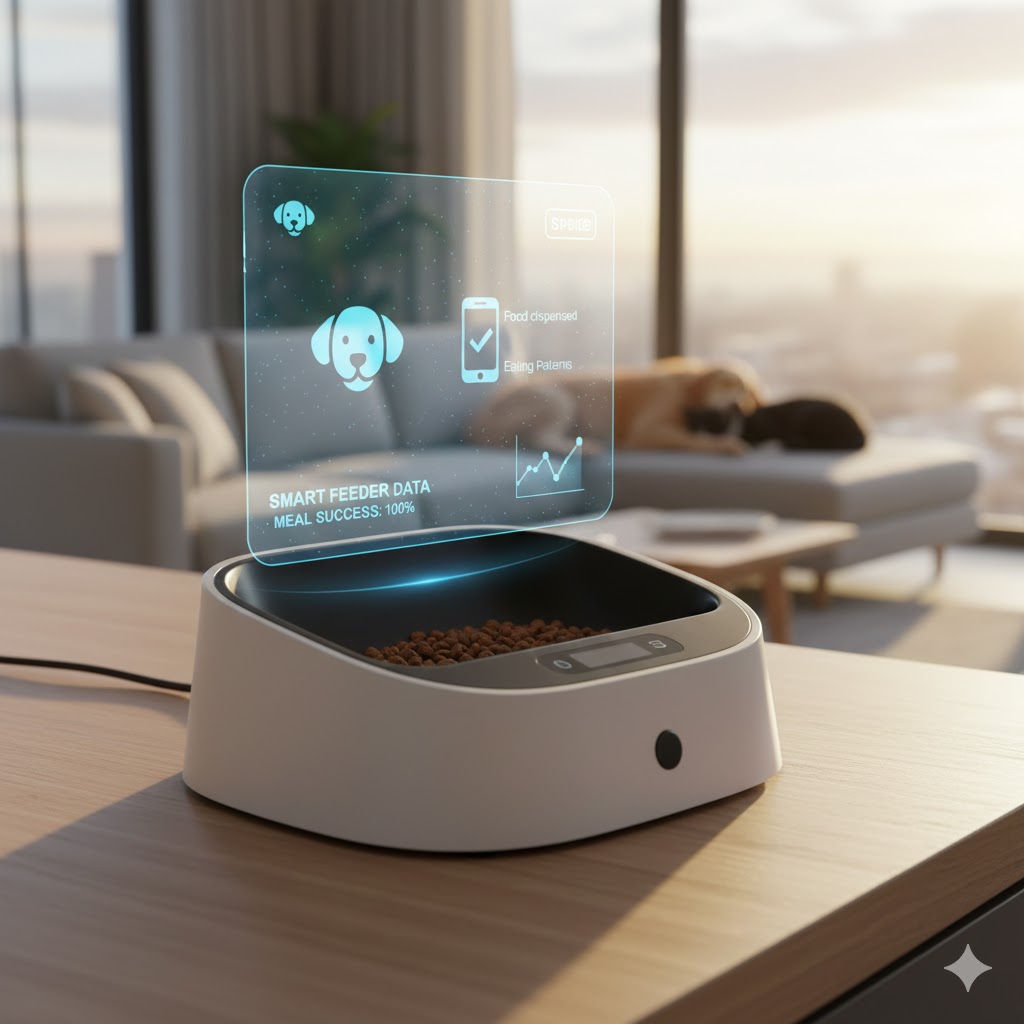
- Your Primary Solution: An Automatic Smart Feeder. This device brings vital consistency to your pet’s feeding routine and offers you significant freedom.
- Key Features to Prioritize: Precise portion control, a reliable dispensing mechanism, a battery backup for power outages.
- Your Problem: “My dog is an escape artist, or my cat is an outdoor explorer, and I live in constant fear they’ll get lost.”
- Your Primary Solution: A Pet GPS Tracker. For pets who roam or are prone to escaping, this is a non-negotiable safety tool.
- Key Features to Prioritize: Real-time (cellular) tracking, geofencing alerts, waterproof design.
- Your Problem: “I have multiple pets on different diets (e.g., one needs to lose weight, another has a prescription food), and they keep stealing each other’s meals.”
- Your Primary Solution: A Microchip-Activated Feeder. This is a specific, high-tech solution for a very common multi-pet household challenge.
- Key Features to Prioritize: Compatibility with your pet’s existing microchip, a sealed lid to keep other pets out and food fresh.
- Your Problem: “My senior pet has health issues, or I want to catch subtle health changes early (e.g., changes in bathroom habits, activity levels).”
- Your Primary Solution: A Health & Activity Monitor or a Smart Litter Box (with monitoring features).
- Key Features to Prioritize: Data tracking (activity, sleep, weight, litter box usage), app alerts for significant changes.
Step 2: Check Your Home’s Technical Requirements
Before you click “buy,” it’s crucial to ensure your home environment is compatible with smart pet technology. Most devices primarily require two things.
1. A Reliable WiFi Network
Your smart device needs to be connected to the internet to communicate with its app on your phone.
- 2.4 GHz vs. 5 GHz: This is the most important technical detail. Most smart pet devices (feeders, cameras, litter boxes, etc.) primarily connect to a 2.4 GHz WiFi band. They typically do not work with the faster 5 GHz band.
- Why? The 2.4 GHz band has a longer range and is better at penetrating walls, which is more important for reliable connectivity of a stationary device than raw speed.
- How to Check: Nearly all modern home routers are “dual-band” (they broadcast both 2.4 GHz and 5 GHz). Often, your 2.4 GHz network will have a separate name (e.g., “MyHomeWiFi_2.4GHz”). If you only see one network name, your router is likely managing both bands automatically, and your device should connect just fine.
2. A Nearby Power Outlet (Most Devices)
This may seem obvious, but it’s often overlooked. Most smart feeders, pet cameras, and smart litter boxes must be plugged into a wall outlet. They are not primarily battery-operated (though some feeders offer a battery backup for power outages, which is an excellent feature).
Before purchasing, visualize exactly where you intend to place the device and confirm that a power outlet is conveniently located nearby.
Step 3: Understand the “True Cost” (Beyond the Sticker Price)
The price you see on the box isn’t always the full story. To avoid unexpected expenses, it’s vital to understand the Total Cost of Ownership, which can include recurring fees.
- GPS Trackers: This is the category where subscriptions are almost always required. All real-time, long-range GPS trackers demand a monthly or annual subscription fee (typically $5-$13/month).
- Why? These trackers contain their own cellular (4G or 5G) chip, similar to a mini-cell phone. The subscription pays for the cellular data plan that allows the device to send its location from anywhere with cell service.
- Beware of “No-Subscription” Claims: Be cautious. These are almost exclusively Bluetooth-only trackers (like an Apple AirTag or Tile). They are fantastic for finding items within a very short range (30-100 feet), but they are not suitable for finding a lost pet that has run more than a block or two away.
- Pet Cameras: While the camera will stream live video to your phone for free, if you want it to record video clips (e.g., when it detects motion or barking) and save them to a cloud server for later review, you will likely need a paid cloud storage subscription (often $3-$7/month).
- Maintenance & Consumable Costs:
- Smart Water Fountains: Require regular replacement filters (typically every 4-6 weeks) to maintain water quality. Budget $40-$80 per year for these.
- Smart Litter Boxes: Some models may require proprietary (and often more expensive) litter or specific disposable waste trays/bags. Others allow you to use standard clumping litter, which can be a significant cost-saver.
Step 4: Separate “Essential” Features from “Nice-to-Have” Gimmicks
Marketers love to pack products with a long list of features. To make a smart choice, learn to identify what truly adds value versus what might be an expensive gimmick.

If You’re Considering a Smart Feeder…
- ESSENTIAL Features:
- Precise Portioning: The ability to dispense exact, small increments of food.
- Backup Battery Power: Critical for ensuring meals are dispensed during power outages.
- Reliable Dispensing: Check reviews for consistent performance and minimal jamming.
- NICE-TO-HAVE Features:
- Voice Recording: A fun feature to call your pet, but often less impactful than the sound of kibble dropping.
- Built-in Camera: Can be convenient, but a dedicated pet camera often offers better video quality and features.
If You’re Considering a Pet Camera…
- ESSENTIAL Features:
- 1080p HD Video & Night Vision: Non-negotiable for clear images day or night.
- Two-Way Audio: To hear your pet and speak to them.
- Motion/Sound Detection with Alerts: To notify you of activity.
- AI Pet Detection: (Often a premium feature) distinguishes pet activity from general motion, reducing false alerts.
- NICE-TO-HAVE Features:
- Treat Tossing: Great for interaction and distraction, but not essential for basic monitoring.
- 360° Pan-Tilt: Useful for large spaces, but a wide-angle stationary camera may suffice for smaller rooms.
Conclusion: Your Best Next Step
You don’t need to outfit your entire home with smart gadgets today. The best approach is to start small: choose one device that tackles your single biggest problem or anxiety as a pet parent.
You’re now ready to shop like an expert. You know how to identify your true needs, verify your home’s technical compatibility, understand all potential costs, and discern which features genuinely matter. This knowledge will empower you to make an informed decision that truly benefits both you and your beloved pet.
Ready to dive deeper into specific categories? Now that you know how to shop, let’s explore the different types of smart devices in detail.