
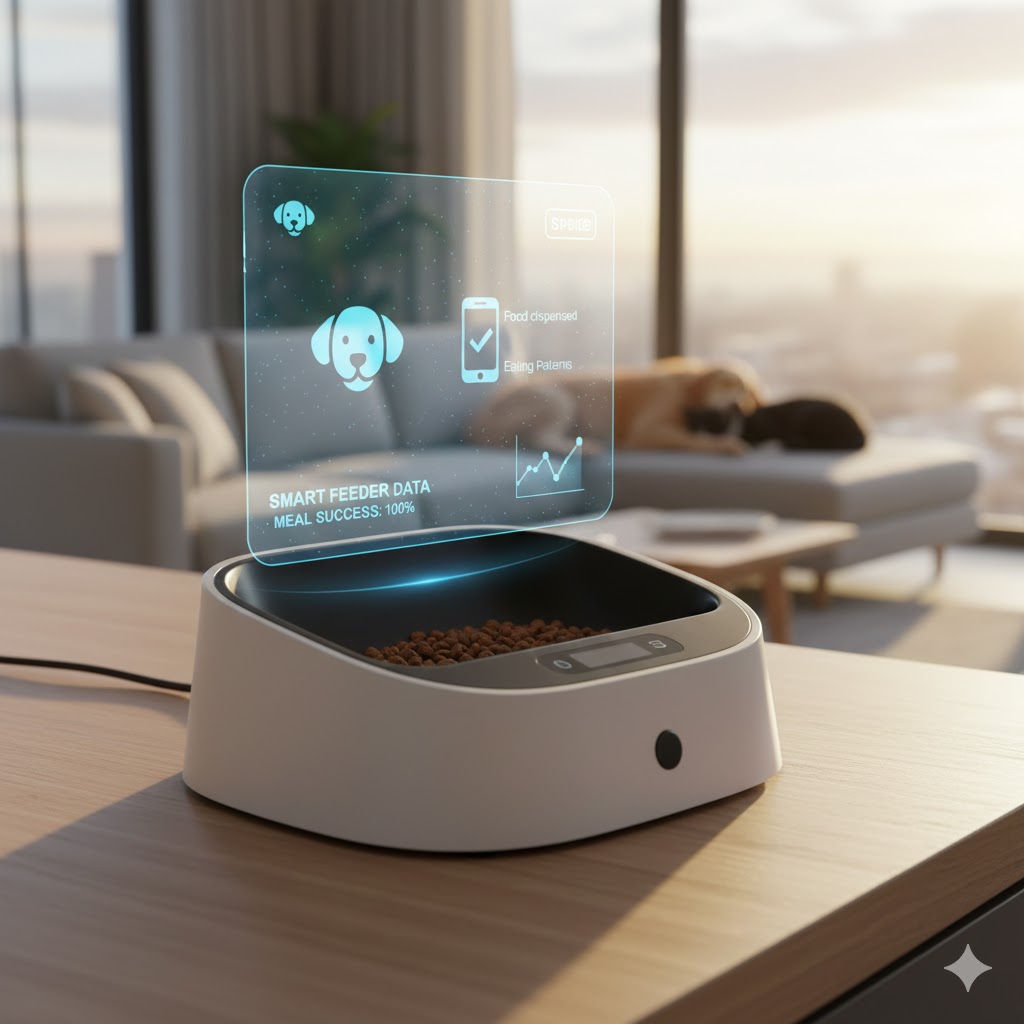
You’re at your desk, and that familiar, nagging guilt creeps in.
Is your dog sleeping peacefully, or is he anxious and pacing by the door? Did your cat actually eat, or is she just staring at the full bowl you left this morning?
If you’ve felt this, you are not alone. For the 86.9 million pet-owning households in the U.S., this worry is a daily companion. It’s a natural part of modern pet ownership: 97% of us consider our pets to be part of the family, but our busy lives often pull us away from them.
We’ve transformed our homes with smart thermostats and voice assistants, yet many of us still manage our pets’ care with a simple bowl and a hope that everything is okay.
But here’s the good news: the technology that revolutionized our homes is now redesigning pet care. Smart pet devices aren’t just expensive gadgets anymore. They are practical, accessible solutions that solve real, everyday problems.
If you’ve ever felt that pang of worry, this guide is for you. No technical jargon. Just a clear path to understanding how smart pet technology works and whether it’s right for your four-legged family member.
What Are Smart Pet Devices?
In simple terms, smart pet devices are connected products that use your home’s WiFi, sensors, and mobile apps to automate, monitor, or enhance your pet’s care from anywhere.
Think of the difference like this:
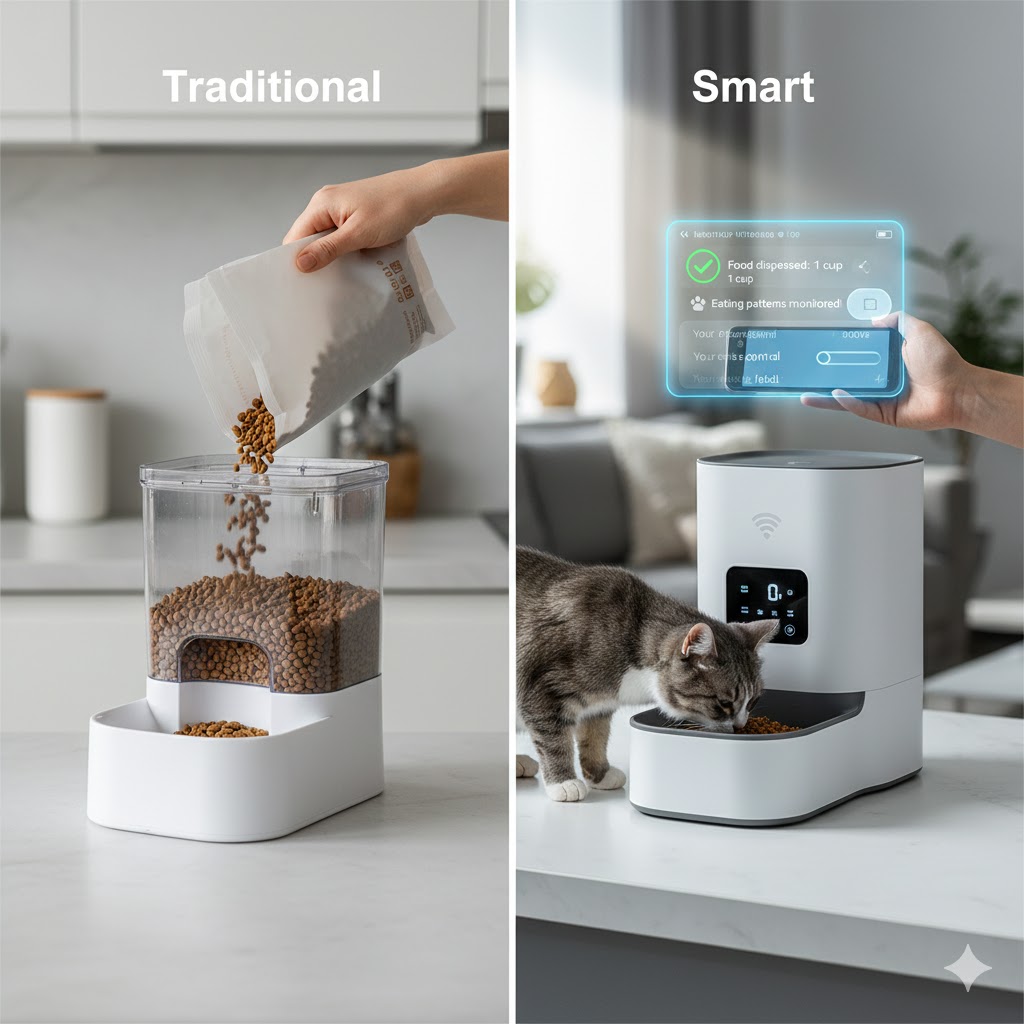
- A traditional pet feeder is like a kitchen timer. It dispenses food when you manually set it.
- A smart feeder connects to your phone. It sends you a notification that your pet has been fed, lets you adjust portions from your office, and tracks your pet’s eating patterns over time.
One is a passive tool. The other is a connected care system. The “smart” element comes from three core capabilities: connectivity (linking to your phone), automation (performing tasks on a schedule), and data (tracking behaviors).
What Makes a Pet Device “Smart” vs. Traditional?
The line between a regular product and a “smart” one comes down to a few key differentiators that transform passive objects into active care partners.
- Remote Control and Monitoring: Traditional devices require you to be physically present. Smart devices break this boundary. From a meeting across town, you maintain full control and visibility.
- Real-Time Notifications: Your traditional water bowl doesn’t tell you it’s empty. A smart device acts as a vigilant assistant. Your cat hasn’t eaten all day? You’ll know.
- Data-Driven Insights: This is the most transformative difference. You’re not just guessing if your pet is drinking enough—you have a week of consumption data showing a 30% decrease that might indicate a health issue before other symptoms appear.
- Intelligent Automation: A traditional timer offers simple automation (food at 7 AM). A smart device adds intelligence, like unlocking a pet door only for your pet’s specific microchip.
What Problems Do Smart Pet Devices Actually Solve?
Beyond convenience, these devices address the critical, stress-inducing problems that pet owners face every day.
1. The Anxiety of Uncertainty
The most universal problem for a pet owner isn’t that something is wrong—it’s that you don’t know. This uncertainty is a significant source of stress for at least 44% of pet owners.
The Solution: Pet cameras with real-time monitoring convert that uncertainty into knowledge. This is one of the key benefits of pet cameras: you can open an app, see your pet is sleeping peacefully, and get back to your day with genuine peace of mind.
2. Inconsistent Care During Irregular Schedules
Many of us no longer work a fixed 9-to-5. Variable shifts, long commutes, and late meetings make a consistent 5 PM feeding time impossible.
The Solution: Smart feeders with remote control adapt to your reality. You can trigger a feeding from your phone if you’re stuck in traffic, ensuring your pet’s routine stays consistent even when yours doesn’t.
3. Missing the Early Signs of Illness
Pets are masters at hiding illness until symptoms become severe. By the time you notice your cat is drinking more water, kidney disease might be advanced.
The Solution: Smart devices flag subtle changes you would never see.
- Smart water fountains track consumption.
- Smart collars and activity monitors track sleep quality and scratching habits.
- These devices give you a baseline for your pet’s normal behavior, allowing you to spot small deviations that could be the earliest sign of a health issue.
4. Multi-Pet Household Chaos
If you have multiple pets, you know the chaos. Which cat ate how much? Is the new puppy stealing the senior dog’s prescription food?
The Solution: Smart devices with individual pet recognition create clarity. Microchip-enabled feeders are a perfect example, as they are designed to open only for the pet with the corresponding microchip, ensuring everyone gets the right food and the right amount.
How Smart Technology Improves Your Pet’s Daily Health
This isn’t just about your peace of mind—these devices directly enhance your pet’s wellbeing.
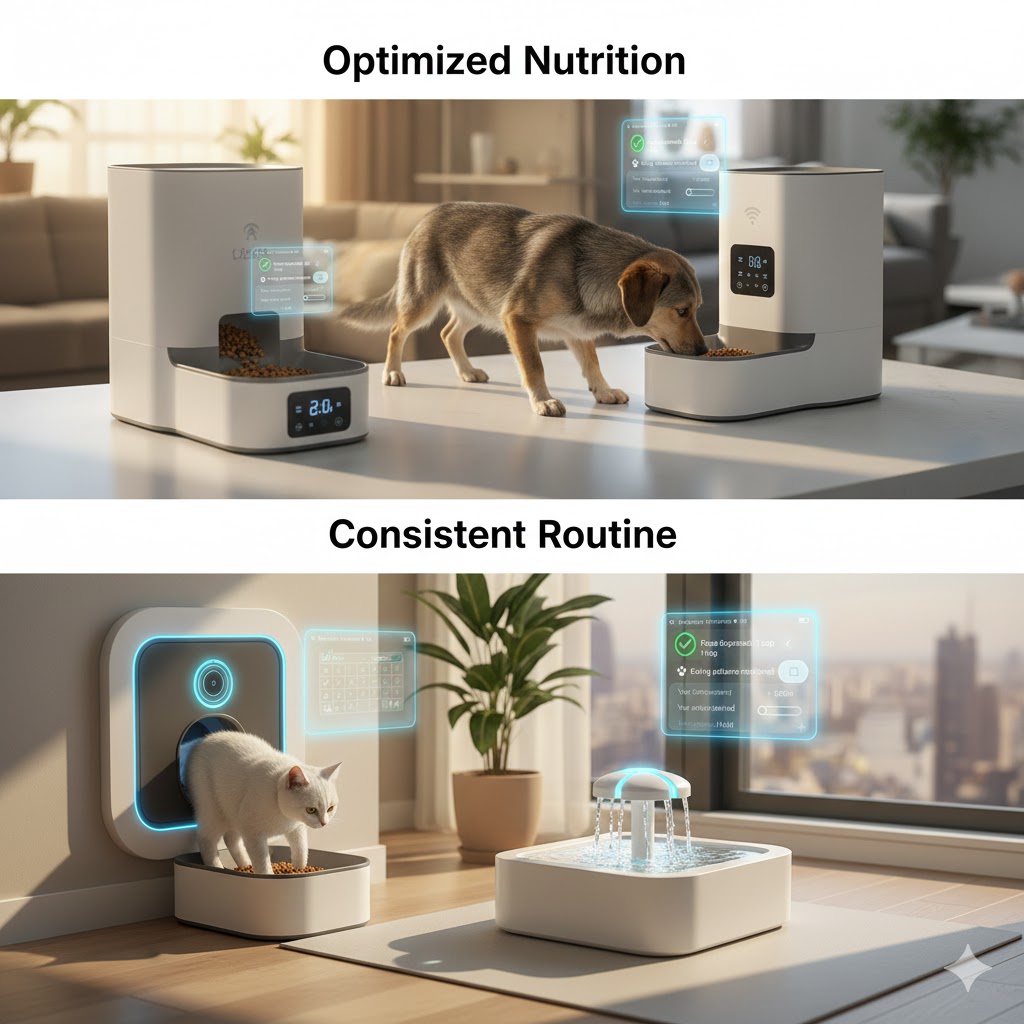
- Optimized Nutrition: With approximately 60% of dogs in the U.S. considered overweight or obese, portion control is vital. Smart feeders measure portions to the gram, taking the guesswork out of feeding and helping you manage your pet’s weight.
- Mental Stimulation: Boredom is psychologically harmful and leads to destructive behaviors. Smart interactive toys (like treat-tossing cameras) provide unpredictable engagement to combat this.
- Consistent Routine: Pets thrive on routine. Inconsistent schedules create stress. Smart devices maintain that consistency, which reduces pet anxiety.
- Better Hydration: Chronic dehydration is a major health issue, especially for cats. Smart water fountains are widely known to encourage drinking by mimicking fresh, flowing water, which helps prevent urinary tract and kidney problems.
Conclusion: So, Are Smart Pet Devices Worth It?
This brings us to the main question: are automatic pet feeders worth it? Are the cameras and trackers just expensive toys?
The answer is a clear yes, if you view them as a new form of “peace of mind”.
The premium you pay for “smart” capabilities purchases something intangible but invaluable: peace of mind backed by information and control. They transform the helpless worry you feel during your workday into informed monitoring and active care.
The evidence is compelling: technology, when applied properly, doesn’t create distance between you and your pet. It enables a level of care that even the most attentive owner can’t provide through observation alone.
Leave a Reply